
The major product of the reaction is:
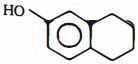
- A$1-$naphthol derivative

- B$2-$naphthol derivative
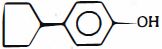
- C$4-$cyclobutylphenol
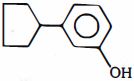
- D$3-$cyclobutylphenol
Explore More
Similar Questions
Identify the reagents used for the following conversion in the correct order.
The decreasing order of the rate of reaction of the following molecules towards electrophilic addition reaction is:
Medium
View SolutionMatch the following reactions in List-$I$ with their products in List-$II$:
List-$I$ List-$II$ $A$. The reaction of $1,6$-dibromohexane with $Zn$. $i$. $H_3C-C \equiv CH$ $B$. Reaction of ethanol with concentrated $H_2SO_4$ at $443 \ K$. $ii$. $H_2C=CH_2$ $C$. Major product in the reaction of propene with $HBr$ in the presence of benzoyl peroxide. $iii$. $CH_3-CH_2-CH_2-Br$ $D$. The reaction of $1,1$-dibromopropane with $NaNH_2$ at $433 \ K$. $iv$. Cyclohexane
| List-$I$ | List-$II$ |
|---|---|
| $A$. The reaction of $1,6$-dibromohexane with $Zn$. | $i$. $H_3C-C \equiv CH$ |
| $B$. Reaction of ethanol with concentrated $H_2SO_4$ at $443 \ K$. | $ii$. $H_2C=CH_2$ |
| $C$. Major product in the reaction of propene with $HBr$ in the presence of benzoyl peroxide. | $iii$. $CH_3-CH_2-CH_2-Br$ |
| $D$. The reaction of $1,1$-dibromopropane with $NaNH_2$ at $433 \ K$. | $iv$. Cyclohexane |
DifficultTS EAMCET 2019
View SolutionWhich of the following is not used to distinguish ethene from ethane?
MediumAIPMT 2002
View SolutionAn organic compound $C_8H_{12}$ on ozonolysis gives $2 \ moles$ of $3-$oxobutanal. Then the structure of the compound can not be
Vedclass Products
For Students
Vedclass Test Series
Mock tests in real JEE/NEET style with performance analysis. 5-day free trial.
Start Free TrialFor Teachers
Exam Paper Generator
Generate Set A/B/C/D exam papers from 7.5L+ questions in 2 minutes. 3 chapters free.
Try FreeFor Institutes
Online Exam Module
Live online exams with unlimited students, 360° analytics & white-label branding.
See Demo