
The current $i$ in an induction coil varies with time $t$ according to the graph shown in the figure. Which of the following graphs shows the induced emf $(E)$ in the coil with time?
- A
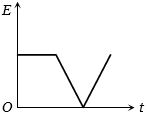
- B
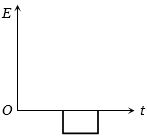
- C
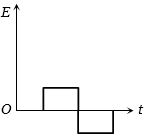
- D
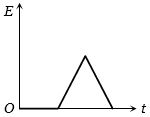
Explore More
Similar Questions
Two different coils have inductances $L_1 = 4 \ mH$ and $L_2 = 2 \ mH$. At a certain instant,the current in the two coils is increasing at the same constant rate,and the power supplied to the first coil is four times that of the second coil. If $e$,$I$,and $U$ indicate the potential difference,current,and energy stored in the inductance respectively,then which of the following is correct?
Difficult
View Solution$A$ small circular loop of area $A$ and resistance $R$ is fixed on a horizontal $xy$-plane with the center of the loop always on the axis $\hat{n}$ of a long solenoid. The solenoid has $m$ turns per unit length and carries current $I$ counterclockwise as shown in the figure. The magnetic field due to the solenoid is in $\hat{n}$ direction. $List-I$ gives time dependences of $\hat{n}$ in terms of a constant angular frequency $\omega$. $List-II$ gives the torques experienced by the circular loop at time $t=\frac{\pi}{6\omega}$. Let $\alpha=\frac{A^2 \mu_0^2 m^2 I^2 \omega}{2R}$.
$List-I$ $List-II$ $(I)$ $\frac{1}{\sqrt{2}}(\sin \omega t \hat{j}+\cos \omega t \hat{k})$ $(P)$ $0$ $(II)$ $\frac{1}{\sqrt{2}}(\sin \omega t \hat{i}+\cos \omega t \hat{j})$ $(Q)$ $-\frac{\alpha}{4} \hat{i}$ $(III)$ $\frac{1}{\sqrt{2}}(\sin \omega t \hat{i}+\cos \omega t \hat{k})$ $(R)$ $\frac{3\alpha}{4} \hat{i}$ $(IV)$ $\frac{1}{\sqrt{2}}(\cos \omega t \hat{j}+\sin \omega t \hat{k})$ $(S)$ $\frac{\alpha}{4} \hat{j}$
Which one of the following options is correct?
| $List-I$ | $List-II$ |
| $(I)$ $\frac{1}{\sqrt{2}}(\sin \omega t \hat{j}+\cos \omega t \hat{k})$ | $(P)$ $0$ |
| $(II)$ $\frac{1}{\sqrt{2}}(\sin \omega t \hat{i}+\cos \omega t \hat{j})$ | $(Q)$ $-\frac{\alpha}{4} \hat{i}$ |
| $(III)$ $\frac{1}{\sqrt{2}}(\sin \omega t \hat{i}+\cos \omega t \hat{k})$ | $(R)$ $\frac{3\alpha}{4} \hat{i}$ |
| $(IV)$ $\frac{1}{\sqrt{2}}(\cos \omega t \hat{j}+\sin \omega t \hat{k})$ | $(S)$ $\frac{\alpha}{4} \hat{j}$ |
Which one of the following options is correct?
The figure shows three circuits with identical batteries,inductors,and resistors. Rank the circuits according to the current through the battery $(i)$ just after the switch is closed and $(ii)$ a long time later,greatest first.
Difficult
View SolutionThe network shown in the figure is part of a complete circuit. If at a certain instant the current $i$ is $5 \, A$ and is decreasing at the rate of $10^3 \, A/s$, then $V_B - V_A$ is: (in $ \, V$)
$A$ conducting loop in the shape of a right-angled isosceles triangle of height $10 \ cm$ is kept such that the $90^{\circ}$ vertex is very close to an infinitely long conducting wire (see the figure). The wire is electrically insulated from the loop. The hypotenuse of the triangle is parallel to the wire. The current in the triangular loop is in counterclockwise direction and increases at a constant rate of $10 \ As^{-1}$. Which of the following statement$(s)$ is(are) true?
$(A)$ The magnitude of induced emf in the wire is $\left(\frac{\mu_0}{\pi}\right) \ V$
$(B)$ If the loop is rotated at a constant angular speed about the wire,an additional emf of $\left(\frac{\mu_0}{\pi}\right) \ V$ is induced in the wire
$(C)$ The induced current in the wire is in the opposite direction to the current along the hypotenuse
$(D)$ There is a repulsive force between the wire and the loop
Vedclass Products
For Students
Vedclass Test Series
Mock tests in real JEE/NEET style with performance analysis. 5-day free trial.
Start Free TrialFor Teachers
Exam Paper Generator
Generate Set A/B/C/D exam papers from 7.5L+ questions in 2 minutes. 3 chapters free.
Try FreeFor Institutes
Online Exam Module
Live online exams with unlimited students, 360° analytics & white-label branding.
See Demo