
Which of the following intermediates is more stable?
- A

- B
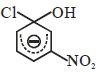
- C
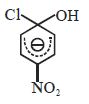
- DAll are equally stable
Explore More
Similar Questions
List the reactive intermediates produced by the fission of a covalent bond and describe their main characteristics.
Medium
View SolutionStability order of the following carbocations is:
$(i)$ $CH_3-C^{+}(CH_3)-CH_2-CH_3$
$(ii)$ $CH_3-CH^{+}-CH_3$
$(iii)$ $CH_3-C^{+}(CH_3)-CH_3$
$(iv)$ $Ph-CH^{+}-CH_3$
$(i)$ $CH_3-C^{+}(CH_3)-CH_2-CH_3$
$(ii)$ $CH_3-CH^{+}-CH_3$
$(iii)$ $CH_3-C^{+}(CH_3)-CH_3$
$(iv)$ $Ph-CH^{+}-CH_3$
MediumAIIMS 2019
View SolutionState whether the following statements are True or False:
$(i)$ $CH_3-CH_2^+$ is more stable than $CH_3^+$
$(ii)$ $CH_3-CH_2^+$ is less stable than $CH_3^+$
$(iii)$ $(CH_3)_3C^+$ is less stable than $CH_3^+$
$(iv)$ $(CH_3)_3C^+$ is more stable than $CH_3^+$
$(i)$ $CH_3-CH_2^+$ is more stable than $CH_3^+$
$(ii)$ $CH_3-CH_2^+$ is less stable than $CH_3^+$
$(iii)$ $(CH_3)_3C^+$ is less stable than $CH_3^+$
$(iv)$ $(CH_3)_3C^+$ is more stable than $CH_3^+$
Easy
View Solution$CH_3-C(CH_3)_2-CH_2-CH_2^+ \to CH_3-C^+(CH_3)-CH(CH_3)-CH_3$
How many $H^-$ shifts are involved in the above rearrangement?
How many $H^-$ shifts are involved in the above rearrangement?
Medium
View SolutionDetermine the decreasing order of stability for the following carbocations: $(I) \ CH_3-C^+(CH_3)-CH_3$,$(II) \ CH_3-CH^+(OCH_3)$,$(III) \ CH_3-CH^+(COCH_3)$.
Difficult
View SolutionVedclass Products
For Students
Vedclass Test Series
Mock tests in real JEE/NEET style with performance analysis. 5-day free trial.
Start Free TrialFor Teachers
Exam Paper Generator
Generate Set A/B/C/D exam papers from 7.5L+ questions in 2 minutes. 3 chapters free.
Try FreeFor Institutes
Online Exam Module
Live online exams with unlimited students, 360° analytics & white-label branding.
See Demo