
If in a hydrogen atom,the radius of the ${n^{th}}$ Bohr orbit is ${r_n}$ and the frequency of revolution of the electron in the ${n^{th}}$ orbit is ${f_n}$,choose the correct option.
- A
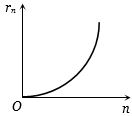
- B
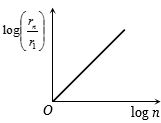
- C
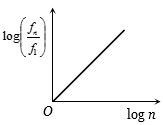
- DBoth $(a)$ and $(b)$ are correct.
Explore More
Similar Questions
If the electronic charge on an electron alone is doubled, then as per the Bohr model, the $K.E.$ of an $e^-$ revolving in the $n^{th}$ orbit becomes:
Medium
View SolutionIn a hydrogen atom,an electron transitions from an orbit of radius $R$ to an orbit of radius $4R$. What is the ratio of their time periods?
Medium
View SolutionThe ratio of the radii of the second and third orbits of an $H$-atom is . . . . . . .
$A$ particle of mass $m$ moves in circular orbits with potential energy $V(r) = Fr$,where $F$ is a positive constant and $r$ is its distance from the origin. Its energies are calculated using the Bohr model. If the radius of the particle's orbit is denoted by $R$ and its speed and energy are denoted by $v$ and $E$,respectively,then for the $n^{\text{th}}$ orbit (here $h$ is the Planck's constant)-
$(A)$ $R \propto n^{2/3}$ and $v \propto n^{1/3}$
$(B)$ $R \propto n^{2/3}$ and $v \propto n^{1/3}$
$(C)$ $E = \frac{3}{2} \left( \frac{n^2 h^2 F^2}{4 \pi^2 m} \right)^{1/3}$
$(D)$ $E = 2 \left( \frac{n^2 h^2 F^2}{4 \pi^2 m} \right)^{1/3}$
$(A)$ $R \propto n^{2/3}$ and $v \propto n^{1/3}$
$(B)$ $R \propto n^{2/3}$ and $v \propto n^{1/3}$
$(C)$ $E = \frac{3}{2} \left( \frac{n^2 h^2 F^2}{4 \pi^2 m} \right)^{1/3}$
$(D)$ $E = 2 \left( \frac{n^2 h^2 F^2}{4 \pi^2 m} \right)^{1/3}$
MediumIIT 2020
View SolutionThe ionization potential for the second $He$ electron is ...... $eV$.
Medium
View SolutionVedclass Products
For Students
Vedclass Test Series
Mock tests in real JEE/NEET style with performance analysis. 5-day free trial.
Start Free TrialFor Teachers
Exam Paper Generator
Generate Set A/B/C/D exam papers from 7.5L+ questions in 2 minutes. 3 chapters free.
Try FreeFor Institutes
Online Exam Module
Live online exams with unlimited students, 360° analytics & white-label branding.
See Demo